


Double Diamond Design Process Explained: A Complete UX Guide for Designers
The Double Diamond Design Process is one of the most widely used frameworks in UX design and product development. It helps designers move from a vague problem to a well-tested, user-centered solution in a structured and logical way.
If you are a UX designer, product designer, UI designer, or someone involved in building digital or physical products, understanding the Double Diamond model is essential. This process is not just theory—it is a practical mindset that helps teams explore problems deeply and arrive at meaningful solutions.
In this detailed guide, we will break down the Double Diamond design process step by step, explain why it is called “Double Diamond,” and show how you can apply it in real-world design projects.
What Is the Double Diamond Design Process?
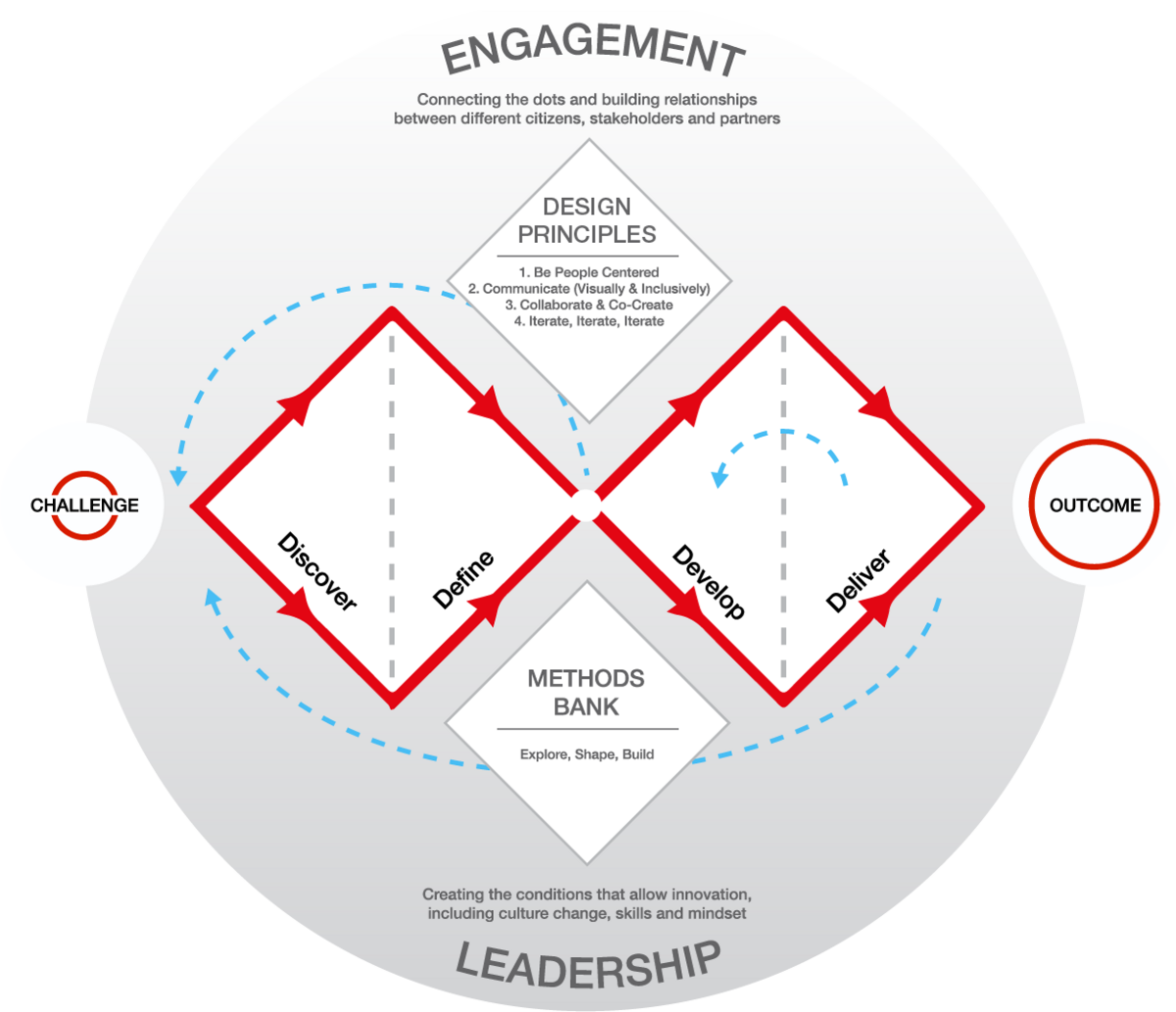
The Double Diamond Design Process is a design framework introduced by the UK Design Council. It visually represents the design journey using two diamonds, each showing phases of divergent and convergent thinking.
In simple terms:
- You start broad, exploring many possibilities
- Then narrow down to focus on what truly matters
- You repeat this pattern twice
This is why it is called the Double Diamond.
The process consists of four core stages:
- Research (Discover)
- Analyze (Define)
- Ideate (Develop)
- Test (Deliver)
Each stage plays a critical role in designing solutions that users actually love.
/
Why Is It Called the Double Diamond?
The name comes from the shape of the process.
- The first diamond focuses on understanding the problem
- The second diamond focuses on solving the problem
In both diamonds:
- You first diverge (expand thinking, explore options)
- Then converge (filter, focus, and decide)
This balance between exploration and focus is what makes the Double Diamond so effective.
Stage 1: Research – Explore the Problem Deeply
Research is the foundation of the Double Diamond design process.
At this stage, you should not limit yourself to a single research method or source. The goal is to explore the problem from as many directions as possible.
What Does Research Mean in UX Design?
Research involves collecting inputs from:
- User interviews
- Past experiences
- Existing products
- Stakeholder inputs
- Market studies
- Competitor analysis
- Observations
- Analytics and feedback
The key idea here is divergence.
You intentionally go in hundreds of research paths, gathering raw data without judging it too early.
Why More Research Is Always Better
Many designers make the mistake of doing just enough research. However, in reality:
- You never know which data will become useful later
- Research done today can be reused in future projects
- The broader your research, the stronger your foundation
At this stage, quantity matters more than clarity.
Stage 2: Analyze – From Data to Meaningful Information
Once you have collected a large amount of research data, the next step is analysis.
This is where the first diamond starts converging.
Data vs Information
There is a subtle but important difference:
- Data is raw, unfiltered, and noisy
- Information is refined, meaningful, and actionable
During analysis, your job is to filter the noise and extract what actually matters.
A Real-Life Example: Delhi to Pune
Imagine you need to travel from Delhi to Pune.
You have many options:
- Train
- Bus
- Car
- Bike
- Shared taxi
- Flight
None of these options are wrong. However, the right option depends on context:
- How much time do you have?
- When do you need to arrive?
- What is the urgency?
If you must reach Pune within a few hours, a flight becomes the only valid option.
Similarly, in UX design:
- All research insights are not wrong
- Some are simply not valid for the current problem
What Happens in the Analysis Phase?
- You evaluate each research input
- You check it against your problem constraints
- You eliminate what does not fit
- You narrow everything down to a single, clear problem definition
Analysis starts with many inputs and ends with one focused direction.
Stage 3: Ideation – Generate as Many Ideas as Possible
Once you have a single source of information, you move into ideation.
This is the second diamond’s divergent phase.
What Is Ideation in Design?
Ideation is an innovative and creative process where you generate multiple solutions for a single problem.
At this stage:
- You do not aim for perfection
- You aim for quantity over quality
- You explore all possible directions
Why Quantity Matters More Than Quality
If you generate only 2–3 ideas, you limit yourself.
If you generate 50 or 100 ideas, you:
- Explore multiple perspectives
- Avoid locking yourself into one solution
- Increase the chances of finding an exceptional idea
Think of it like this:
Choosing 1 design out of 10 is easier and better than choosing 1 out of 2.
Low-Fidelity Prototypes and Wireframes
Ideation works best with low-fidelity outputs, such as:
- Paper sketches
- Doodles
- Wireframes
- Rough layouts in Figma
For example, when designing a login flow:
- One idea could be a single screen
- Another could be a multi-step flow
- Another could use OTP instead of passwords
These ideas are quick, cheap, and easy to iterate.
Watch Double Dimond Design Process on Youtube
Stage 4: Testing – Validate and Refine the Best Ideas
Testing is one of the most critical steps in the Double Diamond design process.
This is the second diamond’s convergent phase.
Why Testing Is Non-Negotiable
Without testing:
- You are designing for assumptions
- Not for real users
- Your product may look good but fail in real life
Testing ensures that your ideas actually solve user problems.
How Testing Works
- You take your multiple ideas
- You test them with users or against the problem
- You observe what works and what doesn’t
- You eliminate weaker ideas
- You refine the strongest one
This process helps you drill down from many ideas to one validated solution.
The Double Diamond Is a Never-Ending Process
Even after research, analysis, ideation, and testing, your solution is never final.
Why?
- User needs change
- Technology evolves
- Contexts shift
- Expectations grow
Design is an iterative process, not a one-time activity.
Just like art:
- An artwork is never truly finished
- It can always be refined
Similarly, user experience design requires continuous iteration as long as your product exists in the market.
When Should You Use the Double Diamond Design Process?
You can use this process when:
- Designing digital products
- Building physical products
- Improving existing user experiences
- Solving complex business problems
- Creating new features or workflows
Whether the problem is small (a login screen) or massive (social issues like poverty or hunger), the Double Diamond framework scales beautifully.

Final Thoughts: Why Every Designer Should Learn Double Diamond
The Double Diamond Design Process teaches you how to:
- Think before designing
- Explore before deciding
- Validate before delivering
It prevents rushed solutions and encourages thoughtful, user-centered design.
If you are serious about UX, product design, or design thinking, mastering this framework will significantly improve the quality of your work.
What’s Next?
If you found this guide helpful:
- Apply the Double Diamond process in your next project
- Experiment with deeper research and broader ideation
- Keep testing and iterating
Design is not about perfection—it’s about continuous improvement.